
The launch of Akrapoint Commercial Capital marks the entry of a new equipment finance platform backed by significant capital and an experienced team of industry professionals. Established by KKR and led by CEO Nate Smith, with equipment finance veteran Gary Shivers serving as Chairman of the Board, Akrapoint is focused on financing vocational assets, specialty trailers and industrial equipment for small to medium sized businesses across a broad range of U.S. industries. KKR has committed $350 million through its Asset Based Finance strategy to support the platform’s launch.
Akrapoint’s leadership team also brings deep, specialized experience across equipment finance, sales, specialty markets and credit risk. Co-Founders Mike Ceroli and Paul Marollo serve as Co-Heads of Sales, with Ceroli bringing 16 years of equipment finance and leasing experience, including six years leading growth in solid waste and recycling, and Marollo brings 22 years of experience building out sales retail channels, expanding into new specialty markets and geographies, and developing remarketing strategies. Co-Founder Neal Shannon, Chief Risk Officer, brings six years experience developing credit underwriting, scoring and risk-rating capabilities and managing credit risk across the portfolio. Together with Smith and Shivers, the team combines extensive industry experience across origination, vendor relationships, specialty markets, credit and portfolio management.
In this exclusive interview with Equipment Finance Advisor, Smith and Shivers discuss the vision behind Akrapoint, the opportunity they see in vocational and specialty equipment finance, and how the company plans to differentiate itself in the market. They also address Akrapoint’s target transactions, direct-to-end-user and vendor origination strategy, credit discipline, technology, the advantages of long-term committed capital, and the team’s approach to building a diversified portfolio designed to perform through industry cycles.
Michael Toglia: Nate, what was the catalyst for launching Akrapoint at this point in the equipment finance market, and what opportunity did you see that wasn’t being fully addressed by existing lenders?
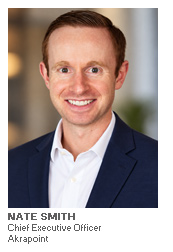
Nate Smith: We saw that there was continued investment in infrastructure, combined with traditional bank lenders continuing to retrench and focus on other areas. We felt there was a real need for an independent finance platform supported by sales professionals who are experts in the industries they serve and the collateral, equipment applications, and the various business models of the obligors. Building that kind of relationship-driven business is the opportunity.
Gary Shivers: After almost eight or nine years of being owned by a bank, understanding the difference between a finance company’s process and how a bank underwrites a deal is astonishing. Being fast on your feet is a huge competitive advantage.
Toglia: Akrapoint is targeting vocational equipment, specialty trailers and industrial equipment across industries ranging from construction and transportation to manufacturing and waste services. What characteristics of these asset classes and end markets make them particularly attractive to you?
Nate Smith: We see vocational assets as tending to have a higher barrier to entry. These more specialized customers need to understand the equipment, and reps need to understand the equipment, the industries, and how the equipment is being used. Also, in most industries, they tend to be less cyclical than traditional highway transportation equipment, for example.
In addition, several assets across different industries have multiple applications. You can put a hydrovac in the oil field, or you can put a hydrovac in the utility space. So, they're multipurpose; they're not single use. They also tend to have longer useful lives and, as we've seen, stronger secondary market values than traditional highway transportation equipment.
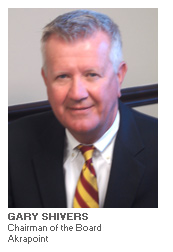
Shivers: One of the reasons I got involved in this is that it’s a learning opportunity for me. It’s equipment finance, but it’s a different process—the way you originate the business, the way you underwrite the business, and the way you service the business. So, I was excited about this whole opportunity because it expands on what I’ve done. I started with micro-ticket lending, then small-ticket lending, and now we’re in the middle market and collateral lending. So, it’s exciting for me because I’m learning as I go, and Nate and his team are the experts.
Toglia: Gary, you’ve built and scaled equipment finance platforms before, most notably Navitas. What lessons from those experiences do you hope to impart to the Akrapoint team?
Shivers: One of the big differences is that I've never understood the power of having committed capital—growth capital—for your business at an early stage. All my experience was: fund it yourself, scrape and borrow, and figure it out as you go. When Navitas became part of the bank, the fact that we didn't have to worry about capital, raising capital, and all of those things allowed our originations to explode. So, we went from roughly $200 to $300 million to $2 billion. So that's the first thing: having a partner like KKR is huge.
The second thing is imparting what I learned through my career to this team. One of the most important things to do as a CEO and a leader is to have a big goal for the team, articulate that goal, and have every day and every meeting point toward that goal. And have a good payoff for the team when they achieve that goal. That's what we did at Navitas and we were very successful. That's important because every day you come in, everybody's in the same boat. They're all rowing the boat in the same direction. We want to get to this goal because when we get to this goal, all of us are going to enjoy something substantial.
The third thing I hope to impart is that people always worry a lot about making sure everything is secure. I've learned over time that the only true security you can have in this career is performance and honesty. If you perform and you're honest, you'll always have a future in this business. Too many people take shortcuts.
Then finally, on a day-to-day basis, there's a big difference between activity and those things that lead to moving the ball forward. Some people can be busy all day long and nothing happens, and other people can do two or three things, and you find yourself in a different space. So, understanding the difference between activity and those things that drive success is another one of my lifelong learning experiences. It's very meaningful and I know what it means on a personal level.
Toglia: Nate, you’ve assembled a management team with decades of combined equipment finance experience. Please tell us a bit about this team and what were the key qualities and areas of expertise you were looking for when putting the team together?
Smith: Yes, we were very intentional, as you mentioned, about bringing on experienced individuals. Obviously, we want to scale this and bring in the right talent, but I really don't think there's any substitute for a strong work ethic, and everybody on the team has that from day one. It's very easy to get caught up in the clock-in-at-eight, clock-out-at-five mentality, with an hour for lunch. Everybody on the team is willing to do everything they can to make this a successful organization. It's an entrepreneurial mindset. Everybody is excited to contribute from day one, in the beginning, and put their stamp, if you will, on it as it continues to grow. And then, obviously, supplementing that with top-tier vendors and vendor relationships to round out the holistic company and customer experience.
Shivers: My experience with this team is that I see a lot of myself and my team 20 years ago in them. They have the same kind of passion, they are fast learners, they want to do well in life, and they have experience.
Toglia: Nate, can you tell us about your target deal sizes, sweet spot, and the types of transactions you're pursuing—whether true leases, dollar-out leases, conditional sales contracts, or other structures? Will you be doing deals nationally, and will your focus be on end users, vendors, or a combination of both?
Smith: We'll finance anywhere from as small as $50,000 all the way up to large-ticket transactions, with the sweet spot probably being in that $500,000 to $600,000 average ticket size range. As far as the products we're going to offer, we'll have secured financing and loan-type products, EFAs, TRAC leases, and select operating leases. And then, as you mentioned, capital or finance leases and dollar-out leases will round out the stack.
One of the things that sets our sales team apart is their willingness to go out and develop relationships directly with the end user. So, we're targeting 50%, if not more, of those relationships driving originations. That's direct to the end user—hitting the payment, knocking on doors, and developing those relationships.
And then 50% or less would be specialty vendor relationships—manufacturers that haven't built out an F&I department or don't necessarily have the resources available that those types of departments can provide. We want to partner with them, and the relationships you build on that side really allow you to be successful in preserving secondary value and helping you remarket the asset when you need to do so.
Initially, it's just going to be organic growth, with an organic sales team spread across the country. Obviously, we won't shy away from opportunities where they present themselves to purchase portfolios that align with what we're trying to build, but day one, it's going to be organic growth.
Toglia: Akrapoint has $350 million of committed capital from KKR behind the launch. How does having that kind of long-term institutional capital influence your ability to structure transactions, support customers and compete in the mid-ticket market?
Smith: As Gary mentioned, shortcuts are the quickest way to fail the business. The capital commitment gives us the opportunity and the confidence to go into the marketplace and build it the right way from day one – setting the business up for success 20, 30, 40 years down the line. With KKR as a backer, the financial resources obviously speak for themselves. But their expertise, and the ABF team's expertise in building and scaling asset-backed finance platforms, gives us the ability to rely on that kind of industry knowledge. Even though other platforms may not be targeted to the market that we serve, they've seen what has worked and what hasn't. Overall, they're a great partner.
Shivers: In this business, you get the first deal from an end user, sometimes generally through a vendor or some other process, and then they have ongoing needs for credit going forward. As we all know, our best credits are your existing customers. But if you only have a certain amount of capital, you have to cut that customer off pretty quickly. This allows us to take much larger exposures with good customers early.
Toglia: The announcement emphasizes “disciplined underwriting” and the ability to support customers “through every cycle.” How are you thinking about credit discipline and risk management as you build a new portfolio in today’s environment?
Smith: I'm a firm believer that credit discipline has to be in place from day one. I started my career in underwriting and worked my way up through the various elements of the business, but credit quality is fundamental to the value of the portfolio. We're a bottom-line and enterprise-value-focused shop, and there's no quicker way to deteriorate that than through poor credit quality. You can't outrun bad credit decisions, so it's a key focus of ours from day one.
One of the benefits of going direct to the end user, as well as working with these specialty vendors is that we're talking with every customer we come into contact with. We understand the credit on a holistic level and really get a feel for the intangibles that maybe don't show up in a credit score. So, every deal will be credit scored where there is a customer credit score, a deal risk score, and then a composite score that's generated that blends both aspects—the credit and the deal itself. Our credit team will use that information as well as technology, including automated financial spreading that supplements that score or other tools. But in reality, at least initially, all deals will be manually touched to some extent. Now, if a deal scores out well, it's more of a check-the-box process to make sure something didn't go wrong in the calculation versus some of your deep-dive underwriting on lower-tier credits.
Toglia: Nate and Gary, what do you believe the industry is going to look like as Akrapoint grows and where do you see the biggest opportunities for independent equipment finance companies?
Shivers: This industry is always going through cycles, but it keeps moving forward and gets more sophisticated. Banks come in, banks go out, independents find opportunities, and then the banks like those opportunities. They come in and pay a lot of money for them, and then all of a sudden, political issues arise. So, it's just a big cycle.
To me, the biggest thing is that you ride the cycle out and always make sure that you don't do anything too foolish, because it's a great industry for the long term. The good professionals who have been involved in this industry for 20 or 30 years have always done very well for themselves. The short-term professionals are gone – they come in and play games, and then they're gone. If you do things right and treat people right, it's a great industry to be in for a long period.
Smith: I echo what Gary said. I don't think the industry's going anywhere anytime soon. I think being an independent, as he mentioned, means we can specialize in the spaces that we serve, and we'll be a mainstay throughout the cycles. As I mentioned, we're trying to get smarter and work smarter, not harder. I mentioned that a strong work ethic is a key to success, but I also think we need to be able to supplement our teams with new technology as it comes in. I don't think technology ever replaces intuition and experience, but it definitely can supplement them and make you smarter.
Ultimately, to Gary's point, it's about building a diversified portfolio and staying disciplined in how you do it. Those that chase a quick buck tend not to last very long.