
Equipment Finance Advisor Publisher Michael Toglia recently sat down with Bob Rinaldi, President of Rinaldi Advisory Services to discuss the growing role of lift-outs in the equipment finance industry. As acquisition opportunities remain scarce and competition for experienced talent intensifies, lift-outs have emerged as an increasingly important strategic alternative for banks and finance companies looking to enter, expand or accelerate their presence in equipment finance.
Michael Toglia: For those unfamiliar with the concept Bob, how would you define an employee lift-out, and how does it differ from traditional recruiting and hiring in the equipment finance industry?
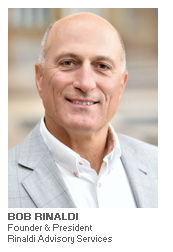
Bob Rinaldi: They are really apples and oranges. When most people hear the term “lift-out,” they think about recruiting. They think about finding a few talented employees who want to leave one organization and join another. That is not what I consider a true lift-out.
If a recruiter finds five salespeople who want to move from one company to another, that is recruiting. There is value in that, but it is fundamentally different from what we are talking about here.
A true lift-out usually involves a management team or an operating team that already knows how to build, manage and scale an equipment finance platform. You are not simply acquiring people. You are acquiring intellectual capital, leadership capability, operating expertise, credit knowledge, vendor relationships and a proven ability to execute. In many ways, a lift-out resembles an acquisition. The difference is that instead of buying an existing company and portfolio, you are bringing in the people who know how to build that business again somewhere else.
Toglia: Why has the lift-out strategy become more prominent in recent years?
Rinaldi: Market reality is driving it. For several years there were very few traditional acquisitions of leasing companies by banks. Institutions that wanted to enter equipment finance often had three choices: acquire a company, build a de novo operation from scratch, or execute a lift-out.
Many of our clients evaluated all three strategies simultaneously. We worked with institutions that wanted to enter equipment finance but simply could not find an acquisition opportunity that fit their objectives. That forced them to think differently. The lift-out became a practical alternative because it allowed them to acquire experience and expertise without purchasing an entire company. The key is flexibility. The institutions that succeed are the ones that evaluate all available options and are prepared when the right opportunity emerges.
Toglia: If a CEO has the opportunity to either hire talented individuals over time or bring in a proven team through a lift-out, what factors should drive that decision?
Rinaldi: The biggest factors are speed, certainty and execution risk.
When you hire people individually over an eighteen- or twenty-four-month period, you still have to integrate them. You have to establish culture, define processes and hope they work well together.
A successful lift-out brings in a team that already knows how to function as a unit. The management team understands the business model. The credit leader understands the sales culture. The operations people understand the workflow. The leadership team has already been through the challenges of building and running a platform. That dramatically reduces execution risk. Now, if a perfect acquisition opportunity exists and it aligns with the institution’s objectives, it should absolutely be evaluated. The reality, however, is that perfect acquisition opportunities are rare. Lift-outs often provide a more practical path.
Toglia: How do you evaluate whether a lift-out opportunity makes sense?
Rinaldi: We approach it almost exactly like an acquisition.
One of the biggest mistakes people make is assuming a lift-out is simply a talent exercise. It is not. Before we ever introduce a team to a potential institution, we build a complete business model. We evaluate projected originations, revenue, expenses, credit losses, staffing requirements, technology costs, compensation structures and growth assumptions. We look at year one, year two and year three projections. We ask difficult questions. How large can the platform realistically become? What are the expected charge-offs? How much capital is required? When does the business become profitable? When does it generate positive cash flow?
If those questions cannot be answered, nobody is ready for a serious conversation. The objective is to give a CEO the ability to quickly determine whether the opportunity aligns with strategic objectives and financial expectations.
Toglia: What advantages does a management-team lift-out provide compared with building a business organically?
Rinaldi: You are acquiring institutional knowledge. A management-team lift-out often brings decades of experience in underwriting, operations, sales management, portfolio management and executive leadership. Those individuals have already learned lessons that a de novo organization would otherwise learn through trial and error. That experience has tremendous value.
The team understands how to build infrastructure, manage growth, establish controls and avoid common mistakes. They know what works and what does not work. When you are entering a specialized industry like equipment finance, that knowledge can significantly accelerate success.
Toglia: What about customer relationships, referral sources and business pipelines?
Rinaldi: Those can certainly be important, but executives should be careful not to overestimate them. The real value is not necessarily that a team brings every customer with them. The value is that they understand how to create those relationships because they have done it before. They know how to develop vendor programs. They know how to build referral networks. They understand credit, pricing, operations and portfolio management. The institutional knowledge is often more valuable than any individual relationship.
Toglia: How do the economics compare between a lift-out and an acquisition?
Rinaldi: They are different, but neither one is free. With an acquisition, you typically pay a purchase price upfront. Depending on the size and quality of the target, it may take years before the earnings justify the investment. With a lift-out, you avoid much of that acquisition premium, but you still have startup costs. You need technology, infrastructure, support staff and time to build a portfolio large enough to generate meaningful earnings.
The question is not which option is cheaper. The question is which option creates the best long-term return relative to the risk being assumed.
Toglia: How important is cultural fit in a lift-out?
Rinaldi: It is critical. Culture is not a soft issue. It is a business issue. In our case, we often know both sides of the equation. We know the management team and we know the institution evaluating the opportunity. After enough years in this industry, you develop a pretty good feel for whether leadership styles, expectations and cultures are likely to align. If the fit is wrong, the probability of long-term success drops significantly. Part of our responsibility is identifying potential cultural issues before anyone commits significant time and resources.
Toglia: What are some of the biggest misconceptions executives have about lift-outs?
Rinaldi: The biggest misconception is that they are easy. People sometimes assume a lift-out is simply a group of employees deciding to leave one company and join another. That is not how successful lift-outs happen. Successful lift-outs require substantial due diligence. The receiving institution needs to understand exactly what it is getting. The team needs to understand exactly what it is joining. Everyone needs clarity around economics, strategy, expectations and culture. Without that work, you are guessing.
Toglia: Do you expect lift-outs to become a more important growth strategy going forward?
Rinaldi: Absolutely. Part of the reason is demographics. Many experienced industry leaders are approaching retirement. At the same time, younger professionals often view career opportunities differently than previous generations. Organizations must pay closer attention to culture, communication and employee engagement. If an entire team leaves and management is shocked by it, that usually means leadership was not paying attention.
The competition for experienced equipment finance professionals is only going to increase over the next decade. Technology and artificial intelligence will help improve efficiency, but they will not replace judgment, leadership and industry expertise.
The organizations that attract, develop and retain top talent will have a meaningful competitive advantage.
Toglia: Any final thoughts for executives considering a lift-out?
Rinaldi: Do your homework. Whether you are the institution considering the opportunity or the team considering the move, understand exactly what you are trying to accomplish. Understand the economics, the culture, the risks and the long-term objectives. Do not assume the grass is greener somewhere else. The best lift-outs are not emotional decisions. They are strategic decisions supported by analysis, planning and realistic expectations.
When executed correctly, a lift-out can be an extremely effective way to build or accelerate an equipment finance platform. But just like an acquisition, success depends on preparation, due diligence and execution.
Sidebar: Lift-Out versus Acquisition versus De Novo
LIFT-OUT
- Acquires experienced leadership and intellectual capital.
- Lower upfront investment than many acquisitions.
- Faster than building entirely from scratch.
- Requires startup infrastructure and portfolio development.
ACQUISITION
- Immediate portfolio, earnings and market presence.
- Requires acquisition premium and integration.
- Limited availability of attractive targets.
- Potential legacy issues and cultural challenges.
DE NOVO
- Maximum control and customization.
- Longest path to profitability.
- Highest execution risk.
- Requires building every function from the ground up.
______________________________________________________
Bob Rinaldi is Founder and President of Rinaldi Advisory Services (RAS), a premier advisory firm specializing in the U.S. equipment finance marketplace. With more than four decades of industry experience, Rinaldi’s firm, RAS, advises banks, independent equipment finance companies, private equity firms and OEMs/ dealership groups on market entry, acquisitions, lift-outs, strategic growth initiatives, capital strategies and enterprise value creation.