
As the breakneck pace of artificial intelligence and cloud computing compresses corporate hardware lifecycles, traditional equipment financing is undergoing a structural evolution. No longer just a transactional capital mechanism, technology finance has transformed into a critical strategic framework for managing innovation, rapid obsolescence, and global asset management. Equipment Finance Advisor publisher Michael Toglia sat down with Simon Harrsen, Executive Vice President for North America at CHG Meridian, to discuss how lessors are stepping forward to absorb technological risks for enterprise clients.
Michael Toglia: How do you feel the role of equipment finance has evolved from a pure funding mechanism into a strategic tool for managing innovation, technology refresh cycles, and providing a genuine competitive advantage in the market?
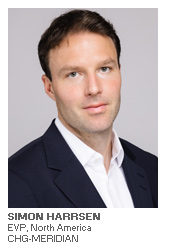
Simon Harrsen: Technology refresh cycles are more uncertain than ever before. There is pressure and rapid innovation occurring everywhere. Because of this, lessors truly need to provide tangible value that goes above and beyond pure capital or the basic financing of IT hardware.
What we have been focusing on over the last couple of years is helping our clients actively manage the entire asset lifecycle. That begins with strategic consulting on what the correct lifecycle actually looks like for each specific equipment category. From there, we support them in managing that lifecycle through digital tools. Specifically, we provide our clients with asset management software to track the continuous usability and current status of those assets.
Furthermore, the remarketing piece is exceptionally critical today. Lessors must possess the capability to take back technology in a highly flexible manner whenever the client needs to refresh or upgrade. It requires a strong understanding of the secondary market at any given moment, enabling us to consult clients effectively on residual values and what that secondary market landscape looks like.
Toglia: It sounds like the relationship has shifted into more of a true partnership than ever because these refresh cycles are compressing so quickly. Do you view your client engagements as a continuous, ongoing strategic conversation?
Harrsen: Oh, absolutely. It has to be. We frequently have clients who approach us mid-term stating they need to upgrade specific assets, or they need to move equipment from one location to another—and in some cases, from one country to another. We actively support them through those transitions. It is absolutely a partnership.
We also strive to be deeply integrated with the original equipment manufacturers (OEMs). The OEMs know their own technology better than anyone else and are positioned to move those assets efficiently. As a strategic lessor, we serve as a vital link between all parties: the secondary market, the OEM, and the end client. That integrated strategic partnership is crucial for any lessor operating in the modern market.
Toglia: As traditional equipment lifecycles are compressed—particularly as AI-driven hardware obsolescence becomes a major concern—how have client expectations shifted regarding financing terms? Are clients actively demanding this flexibility at end-of-life compared to three or five years ago, or are you primarily the one presenting these options to them?
Harrsen: Client expectations are higher than ever before, and refresh cycles have notably shortened. We see this when analyzing AI infrastructure hardware. Innovation pressure is higher; new generations of microchips are being released every two to three years now, rather than every five years. Clients require the absolute newest equipment to keep pace with intense market competitive pressures.
Market uncertainty has forced us to become significantly more flexible. In many cases, it requires us to deliver a comprehensive Device-as-a-Service (DaaS) solution. We have invested heavily in this capability over the past few years. We are no longer just providing basic equipment financing; we are delivering an integrated DaaS solution that encompasses lifecycle management services—moving equipment into facilities, handling logistics from point A to point B, and structurally allowing clients to return equipment early before the official lease term expires. All of these demands have been placed squarely on lessors.
Toglia: When you use the phrase "Device-as-a-Service," could you expand on that model for our audience? Also, when you propose DaaS as the optimal solution, are corporate lessees surprised to hear that this level of flexibility and service is available in an equipment finance framework?
Harrsen: We have actually observed a steady, rising demand for Device-as-a-Service solutions over the last five to ten years. This is driven by two main factors: a desire for maximum flexibility and reduced internal IT budgets. Many clients simply no longer possess the internal capacity or resources to manage the asset lifecycle by themselves.
As a result, integrating IT services directly into the equipment finance structure has become highly important. While we still see a very large, traditional market segment that looks for pure, straightforward equipment financing, an advanced segment is actively approaching us specifically for holistic, integrated DaaS structures. They want a single solution that simplifies the administrative, operational, and logistical hurdles of technology management. That is the capability we have spent the last few years developing.
Toglia: AI infrastructure investments are significant capital undertakings. How do you structure financing to accommodate these dramatically higher costs since nobody knows exactly where this technology will be in a few years? How do you map out a client’s long-term needs and build in the necessary flexibility for the next upgrade cycle?
Harrsen: Because this technology is so brand new, it is a continuous learning process for everyone—ourselves included. To manage this uncertainty, we stay deeply plugged in with major OEMs, specialized IT service providers, and our broader client base. There is still significant debate in the broader market; some analysts suggest the AI sector is a bubble, while others maintain we are only at the very infancy of paradigm shift. It is incredibly difficult to predict with absolute certainty where it will go.
We look at all available market data and collaborate closely with industry consultants. Fortunately, CHG Meridian has been in this market for over 50 years and possesses a vast repository of historical data. We have successfully navigated major historical technological shifts—from old-school IBM mainframes to the rise of enterprise laptops, tablets, and smartphones. We leverage that historical experience to navigate this new frontier.
Enterprise clients do not want to take on the solo risk of betting on unproven technology lifecycles. Through the flexible leasing models we provide, we take on a significant portion of that technology risk for them—whether they need to return and upgrade the equipment much faster than initially anticipated, or conversely, if they decide to hold onto the hardware a bit longer.
Toglia: While your primary focus today is leading North America, you have deep experience managing technology finance portfolios on a global scale. CHG Meridian operates across more than 30 countries. Are you noticing a fundamental difference in how companies in the U.S. approach technology infrastructure upgrades compared to their counterparts in Europe or other international markets?
Harrsen: We see a fundamental divergence right now within the AI infrastructure sector. Capital investments in AI infrastructure are significantly larger and moving at a much faster, more aggressive pace in the United States. US companies are being highly proactive in deploying capital into this space.
When you look at the IT end-user device segment—laptops, mobile devices, and tablets—the global markets are synchronized. Clients are seeking sophisticated asset management software capable of tracking assets on a truly global scale. So, while end-user workplace technology is highly mature globally, the scale and speed of AI infrastructure investment in the U.S. is currently operating on a different level. Other international markets are catching up, but it will simply take more time.
Toglia: Given how rapidly things are changing, do you think the equipment finance industry itself is only at the beginning stages of developing much more creative, structured financial solutions?
Harrsen: Absolutely. Historically, the equipment finance industry has proven to be exceptionally agile at adapting to new market needs, evolving asset classes, and technological innovations over the decades. The demand for flexible structured finance is going to be higher and more critical than ever before.
Consider the current economic environment where asset price increases and rapid innovation mean that corporate capex forecasts and annual budgets made just last year are frequently rendered obsolete within months. Everything is shifting on a monthly basis. Flexible equipment financing is more relevant than ever.
In fact, we are currently closing deals and engaging in conversations with enterprise clients who had little interest in equipment leasing two or three years ago. Suddenly, they are interested because their internal capital budgets simply cannot absorb the significant investments required to upgrade their IT hardware to remain competitive. This shift represents a tremendous growth opportunity for the equipment finance industry.